
Blog
- Home
- Blog
The Most Misunderstood OCD: When Your Own Body Becomes the Obsession
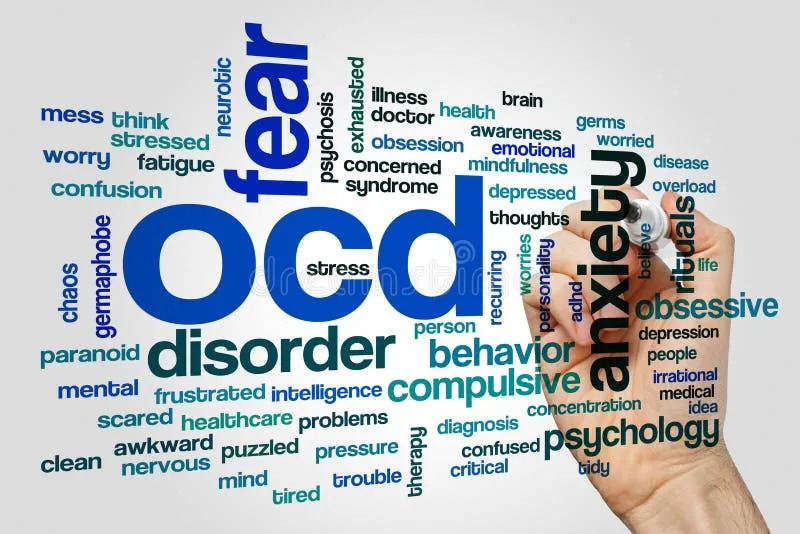
Sensorimotor Theme in OCD
There is a type of OCD that many people do not talk about not because it is rare, but because it feels so confusing to explain. This is Sensorimotor OCD.
It can manifest as a hyper-awareness of breathing, blinking, swallowing, heartbeat, the position of your tongue, or even the process of thinking itself. The question sufferers ask repeatedly is: “Why can I not stop noticing it?”
You breathed automatically your entire life. Your brain didn’t suddenly "forget" how to function; it simply started monitoring a process that was always meant to be automatic.
The Story OCD Tells
Once the monitoring begins, OCD attaches a narrative to the sensation. This is where cognitive distortions enter the frame:
Catastrophizing: "If I keep noticing my breathing, I will go crazy."
Future Prediction: "What if this never goes away?"
Hyper-responsibility for Awareness: "I must manually control this or I will stop breathing."
The "Sticky" Attention
Your brain notices thousands of things daily the feeling of your clothes, the hum of a fan, the pressure of your feet on the ground. You don't worry about those because your brain hasn't labeled them as threats.
Sensorimotor OCD isn't really about breathing or blinking; it’s about the brain deciding: "This matters too much." Once that happens, attention becomes "sticky."
Trying to force yourself to stop noticing your breathing is like trying to force yourself to fall asleep. The more effort you exert, the more "awake" and alert the brain becomes. Every time you check Am I still noticing it? Is it gone now? the brain learns that the sensation is important and continues to watch it.
Shifting the Goal: From Avoidance to Acceptance
Many people believe the goal of recovery is to stop the awareness entirely. In reality, the goal is to stop treating the awareness as a threat.
Recovery doesn't come from certainty or "fixing" the sensation. It comes from a shift in attitude:
"Maybe I will notice it today."
"Maybe my brain is being weird right now, and that’s okay."
This is where a touch of humor helps. Your brain is acting like it found a new app and doesn't know how to close it. When you remove the importance, the system eventually quiets down. Attention follows importance; remove the fear, and the brain eventually gets bored.
Living with Discomfort
Instead of saying, "I must feel normal before I can do things," the shift becomes: "I will live my life even if this feels strange."
This teaches the brain a vital lesson: This is uncomfortable, but it is not dangerous. You can notice your heartbeat and still work. You can notice your blinking and still have a conversation.
Over time, the monitoring system relaxes not because you forced it to, but because the brain stopped receiving danger signals. If you are experiencing this, know that you are not alone. Recovery is possible not through fighting or controlling, but through allowing uncertainty and dropping the struggle.
Sometimes the brain just needs to learn: This is not an emergency.
Coach, Kartikey
Founder of Voice at Peace
Recent Posts
-

How to Identify Subtle Compulsions
Jan 01, 1970 -
-
-

A Small Tip to Stop Arguing With Your OCD Thoughts
Jan 01, 1970 -

Why “Why Did I Get OCD?” Doesn’t Matter in Recovery
Jan 01, 1970