
Blog
- Home
- Blog
Therapy vs Medications or Therapy and Medications?
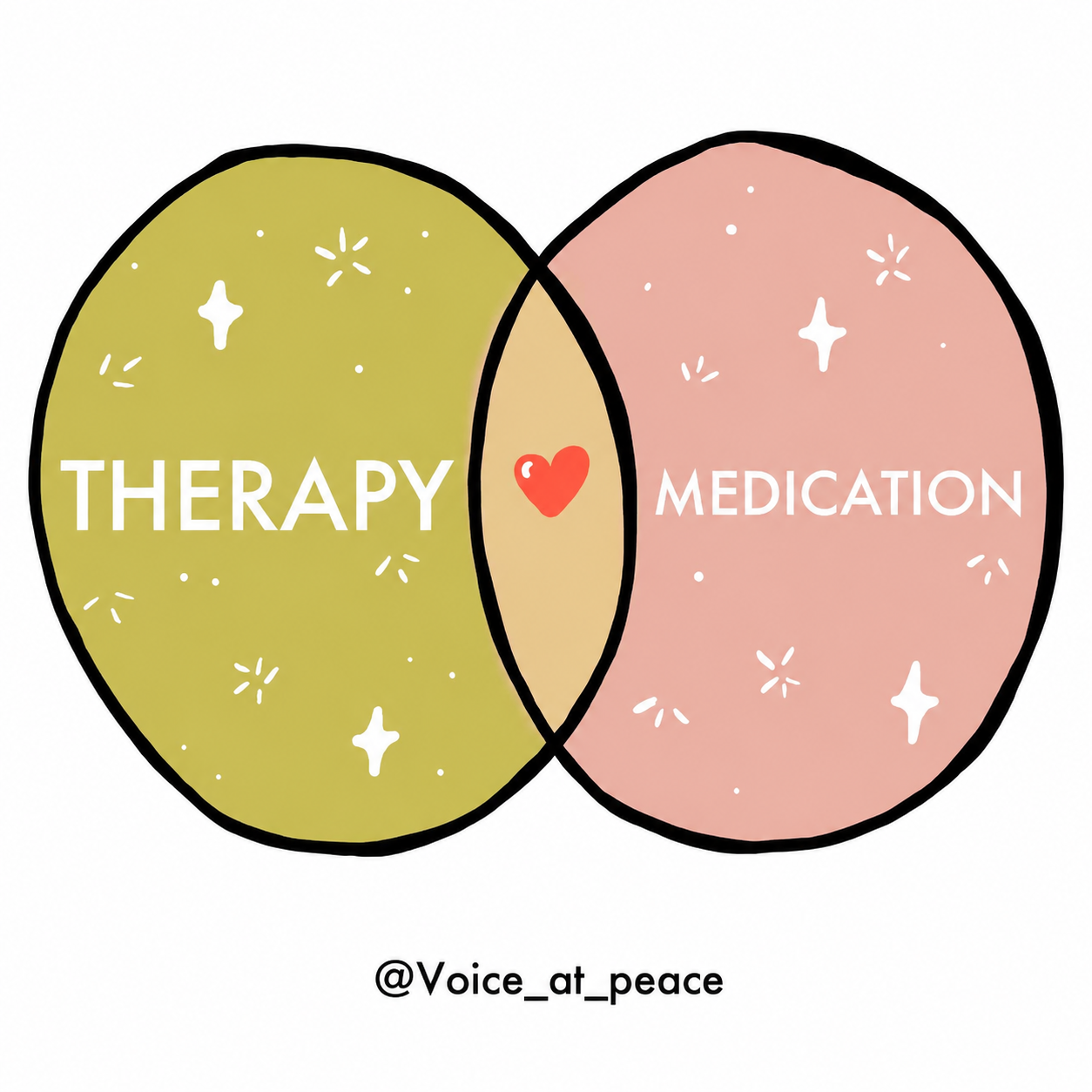
When it comes to mental health disorders, especially behavioural conditions like anxiety, OCD, and depression, people often split into two groups.
One group believes that medication is the answer. This group often includes psychiatrists, people for whom therapy did not work, or those who feel medication is the easier option.
The other group strongly believes in therapy. These are often people who recovered through therapy alone and are now living healthy, fulfilling lives.
This has created an endless debate.
Unfortunately, it is the sufferers who pay the price.
Many become so confused that they struggle to make a decision. Others choose one approach, later regret it, and eventually become resistant to both therapy and medication.
But the truth is, the question itself is flawed.
It should not be "Medication vs Therapy."
Let us understand this from the basics.
Whenever a problem is behavioural, such as OCD, lasting recovery is not possible unless healthier behaviours are learned.
For example, imagine someone has developed the habit of writing certain words in excessively dark, bold capital letters because of an unhealthy cognitive pattern or bias.
Now suppose we prescribe an SSRI that helps increase serotonin availability in the brain.
Will they feel less stressed?
Probably yes.
Will their anxiety reduce to some extent?
Most likely.
But will that habit of emphasizing every capital letter suddenly disappear?
Absolutely not.
Unless we help the brain develop new pathways through practice, break unhealthy cognitive patterns, and repeatedly learn healthier responses, that behaviour is unlikely to change.
That learning process is what therapy is all about.
So does that mean medication is bad?
Yes... and no.
The answer is not black and white.
If someone is responding well to therapy, prescribing medication unnecessarily may not be the best approach.
But what if the person's anxiety is so overwhelming that they cannot even attend therapy?
What if they are unable to walk into a clinic?
What if they cannot even join an online session because their symptoms are too severe?
In those situations, therapy is simply not reaching them.
Our first goal should be to help them reach a place where they are actually able to participate in therapy.
This is where medication can play an important role.
Psychiatrists may prescribe medications such as SSRIs or SNRIs to reduce the intensity of symptoms.
Once the person becomes stable enough to attend sessions, engage in therapy, and begin changing the behavioural patterns that maintain the disorder, they can often work with their psychiatrist to gradually reduce the medication if appropriate.
This is why the debate of Medication vs Therapy is misleading.
It is true that for behavioural disorders, therapy is what helps create lasting behavioural change.
But some people genuinely need medication and therapy together, especially in the beginning.
The right approach depends on the individual.
That decision should be made by an experienced psychiatrist together with a professional who understands evidence-based treatment for OCD and related disorders.
Recovery is not about choosing sides.
It is about choosing the approach that gives the person the best chance to heal.
I hope this helps you develop a healthier understanding of recovery.
Kartikey Dubey
Founder of Voice at Peace
Recent Posts
-

How to Identify Subtle Compulsions
Jan 01, 1970 -
-
-
A Small Tip to Stop Arguing With Your OCD Thoughts
Jan 01, 1970 -

Why “Why Did I Get OCD?” Doesn’t Matter in Recovery
Jan 01, 1970