
Blog
- Home
- Blog
Mental Health Is Not "Craziness": It Is Just Another Health Condition Like Diabetes or Heart Disease
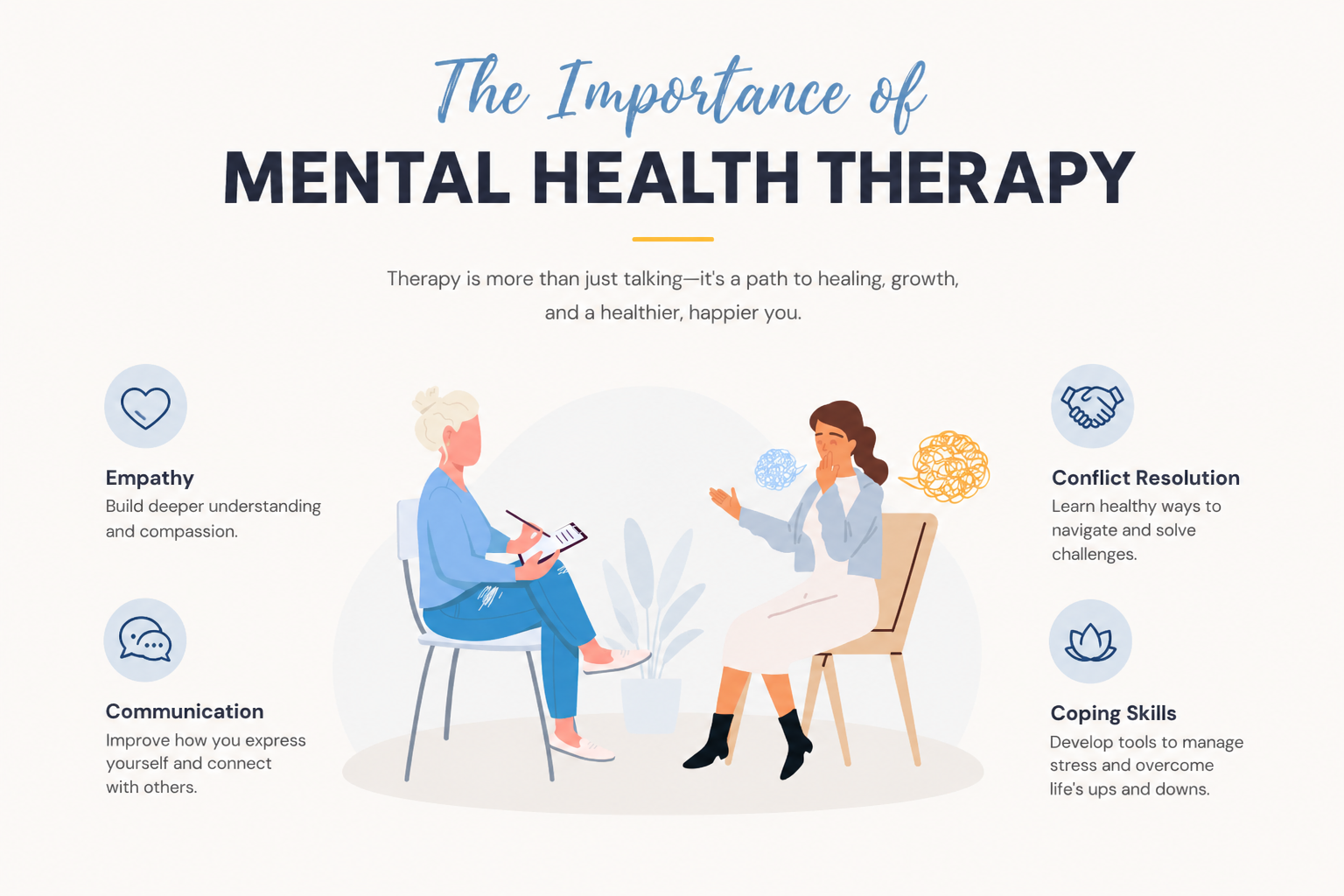
We all know that when the body gets injured or develops a high fever, we go to a doctor.
If someone had a temperature of 104°F and said,
"I'll just explain it to myself and it will go away."
Most of us would find that strange.
If someone broke a bone and said,
"I'll think positively and heal it myself."
We would probably encourage them to see a medical professional.
Because we understand that some physical problems require proper treatment.
Nobody judges a person for seeking help when they are physically unwell.
Nobody calls them weak.
Nobody labels them.
But when it comes to mental health, the story often changes.
A person suddenly starts experiencing intense fear.
They begin worrying all day.
They lose interest in things they once enjoyed.
They struggle to focus.
Or perhaps they become trapped in endless OCD thoughts and compulsions.
Yet many people hesitate to seek help from a psychologist or psychiatrist.
Why?
One of the biggest reasons is social stigma.
Even today, many people associate anxiety, depression, OCD, and other mental health struggles with being "crazy."
They fear what others will think.
They fear being judged.
They fear being labeled.
But is that fear justified?
Are mental health struggles really a form of craziness?
Not at all.
Before answering that question, it is important to understand what we mean by a mental health disorder.
We generally consider something a disorder when it causes significant distress.
Or when it interferes with a person's ability to function in daily life.
Or when it puts themselves or others at risk.
For example:
Someone with severe social anxiety may avoid important opportunities because of overwhelming fear.
Someone with panic disorder may stop traveling or leaving the house.
Someone with OCD may spend hours trapped in checking, reassurance seeking, or mental rituals.
When thoughts, emotions, or behaviors begin creating serious suffering or interfering with life, we consider them mental health disorders.
That is very different from being "crazy."
The idea of "losing your mind" is often associated with conditions where a person loses touch with reality.
Anxiety, depression, OCD, trauma, and many other mental health conditions are not that.
They are health conditions.
And just like physical health conditions, they can happen to anyone.
- A business owner.
- A teacher.
- A scientist.
- A doctor.
- A student.
- A policymaker.
Mental health problems do not discriminate.
Just as anyone can develop diabetes or high blood pressure, anyone can experience anxiety, depression, OCD, or burnout.
Now let's talk about something else that many people believe.
They say,
"I should be able to handle this on my own."
"I just need to think differently."
"I need to be stronger."
But if simply talking ourselves out of anxiety worked, mental health disorders would not exist.
The problem is not that people lack intelligence.
Most people already know what they should do.
Many people with anxiety know they are safe.
Many people with OCD know their fears are irrational.
Many people with panic attacks know they are not actually dying.
Yet the fear remains.
Why?
Because mental health struggles are not simply problems of logic.
They are often problems of learning, conditioning, habits, and nervous system responses.
A person can understand something intellectually while their body continues reacting with fear.
This is why professional help can be so valuable.
Therapy and coaching are not simply about explaining things.
Most people have already spent years explaining things to themselves.
What they need is help changing the patterns that keep them stuck.
A good therapist or coach helps people identify unhealthy thinking patterns.
They help people recognize cognitive distortions.
They teach healthier ways of responding to fear, uncertainty, and discomfort.
They help people stop fighting their thoughts and start changing their relationship with them.
Most importantly, they provide guidance that is difficult to give yourself when you are trapped inside the problem.
Think about it this way.
A surgeon cannot perform surgery on themselves.
A lawyer hires another lawyer.
Even elite athletes have coaches.
Not because they are weak.
But because outside guidance helps us see things we cannot see on our own.
Mental health is no different.
Seeking help is not a sign of weakness.
It is a sign of wisdom.
It is a sign that you recognize your suffering deserves attention.
Just as we seek medical treatment for physical health problems, we should feel comfortable seeking support for mental health challenges.
Because the brain is part of the body too.
And when any part of the body is struggling, getting help is not something to be ashamed of.
It is something to be proud of.
Let's break the stigma.
Kartikey
Recent Posts
-
How to Identify Subtle Compulsions
Jan 01, 1970 -
-
-

A Small Tip to Stop Arguing With Your OCD Thoughts
Jan 01, 1970 -

Why “Why Did I Get OCD?” Doesn’t Matter in Recovery
Jan 01, 1970